
Benjamin S. Dowell
Historical Summary
Benjamin Shacklett Dowell (1818–1880), a Kentucky native and veteran of the Mexican War, became one of the earliest Anglo pioneers in the El Paso valley after arriving about 1849. Captured at La Encarnacion in 1847 while serving in the First Regiment of the Kentucky Cavalry, he was later released and received a land claim for his military service. In El Paso he first worked on the extensive Ponce de Leon ranch in the area that later became downtown, at a time when most of the valley’s population was concentrated in Ysleta, Socorro, and San Elizario.
Dowell married Juana Marquez, a Tigua woman from Ysleta and daughter of a tribal cacique, around 1852. He entered public life early, serving as deputy to Sheriff William Ford after El Paso County’s organization. Following the Magoffin Salt War, the family briefly moved to California, where their daughter Mary was born in 1854, before returning to a changing El Paso marked by the reestablishment of the military post, the arrival of stage service, and the founding of a Masonic lodge.
By the late 1850s Dowell had become a prominent businessman, purchasing property at Alameda and Sonora streets and operating a billiard saloon, grocery, hotel, and the town’s first official post office from 1857 to 1860. He and his brother Nehemiah acquired additional town and valley lands, including major holdings in the Upper Valley. His establishment also served as a polling place during the secession vote, in which El Paso overwhelmingly favored secession despite a very small population.
During the Civil War, Dowell joined the Confederate cause as a captain and was involved in an unsuccessful attempt to run the Galveston blockade with cotton. While he was away, Juana struggled to support the family in El Paso del Norte amid wartime hardship. After the war, Dowell secured help from Unionist W. W. Mills to avoid arrest and recover his property, then resumed business and entered a profitable horse-racing partnership centered on his mare Kit.
Dowell was deeply involved in Freemasonry, serving as worshipful master of El Paso Masonic Lodge No. 130 in 1868, later as secretary, and as district deputy grand master over a wide frontier region. He helped secure land for a Masonic cemetery and assisted in obtaining a lodge building in 1878.
When the City of El Paso was incorporated in 1873, Dowell was elected its first mayor. His administration addressed municipal basics such as water protection, criminal ordinances, ward divisions, and a city seal. He also corresponded with the mayor of El Paso del Norte over changes in the Rio Grande channel affecting the international boundary, declining to settle the issue locally and leaving unresolved a matter later associated with the Chamizal dispute. Defeated for reelection in 1874, he later served as county commissioner after his election in 1878.
Dowell and Juana had five children, and their descendants remained prominent in the El Paso area. Known locally as “Uncle Ben,” he died of pneumonia on November 8, 1880, after working in cold water to repair an irrigation ditch on his ranch. Juana died in 1890. His legacy as a pioneer civic leader endured, and in 1959 the El Paso Independent School District named Dowell Elementary School in honor of both Ben Dowell and his daughter Mary, an early teacher.
Document Transcription
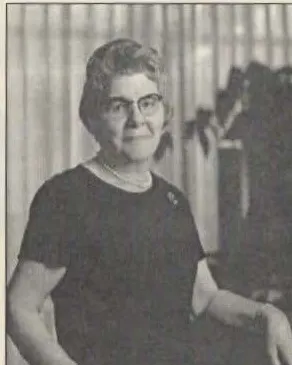
NANCY HAMILTON
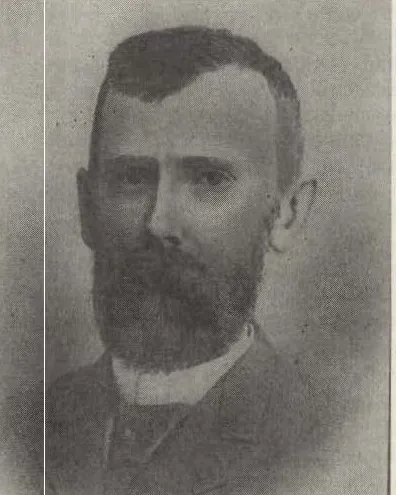
BENJAMIN SHACKLETT DOWELL
1818-1880
(photo courtesy Robert W. Phillips)
Hall of Honor
1992
Tribute to Ben Dowell
by Nancy Hamilton
Benjamin Shacklett Dowell came to El Paso as one of the earliest pioneers, at the close of the War with Mexico. He arrived in about 1849, white-haired at the age of thirty-one years. Tradition holds that his hair turned white while he was a prisoner of war in Mexico City. A native of Kentucky, he had been a volunteer in the First Regiment of the Kentucky Cavalry during the war. He was in a party that was captured at a ranch called La Encarnacion on January 21, 1847. He was freed the following September and, upon his discharge, was among those receiving claims to 160 acres of land for having served in the military.
We do not know what drew him to the El Paso valley, but upon his arrival he went to work for Juan Maria Ponce de Leon, who had large land holdings on both sides of the river. The ranch on the east side, where Dowell worked, occupied the heart of the present downtown area, and was planted in orchards and vineyards. Few people lived in that immediate area; the valley's population of about five thousand was clustered mainly around Ysleta, Socorro, and San Elizario.
It was in Ysleta that he found his wife, Juana Marquez. A Tigua Indian, she was the daughter of a tribal cacique. When they married in about 1852, she was nineteen and he was thirty-four. She spoke only Spanish and the Tigua language and, like many young women of her era, had no formal schooling.
In 1853 Dowell's closest friend, William Ford, became sheriff of El Paso County, which had been organized only three years earlier. Ben became his deputy. Following the so-called Magoffin Salt War in January, 1854, the two men took their families to California. There they found the construction of houses much more profitable than panning for gold. Ben and Juana's first child, Mary, was born there on October 31, 1854. Six months later, the family decided to return to El Paso, where several changes had occurred in their absence. The Post at El Paso, which had been on the Ponce ranch location from 1849 to 1851, had been re-established in January of 1854. Stage service had begun, linking the community to San Antonio and Santa Fe. And a Masonic lodge had been instituted in April.
Dowell evidently went into business for himself at this time. In 1857 he paid $450 for the 128-by-60-foot lot at the corner of Alameda and Sonora, now El Paso and West San Antonio streets, where he operated his well-known billiard saloon. It was located in the lower end of a long adobe building that occupied the block where the Westin Del Norte Hotel now stands. Family quarters were in the back of the building. Ben's brother, Nehemiah, called Nim, joined him during this period, for his name also is shown on lots in the 1859 plat of El Paso drawn by Anson Mills. Nim's lots were part of the present Civic Center site.
Ben also would acquire other property, including the site of the present Caples Building. In 1863 he and Nim were granted 320 acres of Upper Valley land by Governor F. R. Lubbock, and Ben also acquired several other large holdings in the vicinity.
Dowell operated not only a saloon, but also a grocery store, at times a hotel, and from 1857 to 1860, the town's first official post office. His place of business was prominent enough that it became the voting place when El Pasoans decided on the secession issue. The Mills brothers, W. W. and Anson, in their respective autobiographies, were undoubtedly the only two who cast the "no" votes, as opposed to some nine hundred favoring secession. The 1860 census, by the way, had shown a population of 428. This election phenomenon was an early example, but by no means the only one, of El Paso's inflation of the ballot box.
Not long after the birth of his son, John, in 1862, Dowell left El Paso to become involved in the Confederate cause, including a botched effort to run the Galveston blockade with a shipload of cotton. He joined the Confederate army with the rank of captain.
On his way home at the close of that war, he visited relatives in Sherman, Texas, where he acquired from his brother the horse, Kit, that was to become famous in El Paso racing circles. Ben's family had waited out the war in El Paso del Norte, now Ciudad Juarez, while Ben was away for nearly a year and a half. Juana sold many of her household goods, including her cookstove, as well as her fine dresses and jewelry, in order to buy food. Mexico was also undergoing economic hardships at that time because of its conflict with France.
Dowell's Masonic lodge brother W. W. Mills, as a Unionist, became involved in federal confiscations of land belonging to secessionists. Those who had served the Confederate cause were subject to arrest by the military upon returning to El Paso. Thus, Ben sent ten-year-old Mary across the river with a letter to Mills, saying he was tired of "living a dog's life," asking Mills' forgiveness for any differences, and seeking his intervention with the military to enable the Dowell family to return home. Mills complied and even entered into a partnership with Ben in racing the mare, Kit, which proved to be a profitable enterprise. The races were held along Overland Street not far from Dowell's saloon, which he was able to reopen when his property was restored.
In 1868 Dowell became the sixth worshipful master of El Paso Masonic Lodge 130, then served two years as secretary. He represented the lodge in obtaining the block bounded by Franklin, Missouri, Mesa, and Oregon streets for a cemetery in 1874. He also served on the committee whose work enabled the Masons to acquire a building in 1878, an adobe structure located at San Antonio and Mesa where the Popular now stands. In 1870 he had become district deputy grand master of an area that had three lodges in a vast territory extending into the Big Bend.
The City of El Paso was incorporated by the Texas Legislature on May 17, 1873. In the election of August 12, Dowell was chosen as mayor, with six aldermen. Their early concerns were for the safety of the water supply, the definitions of crimes and punishments for them, the division of the city into three wards, and the design of a city seal. Within a month, three aldermen resigned and a fourth was disqualified, so another election was held in October to fill the vacancies.
During his term of office, Dowell corresponded with the mayor of El Paso del Norte regarding the changing channel of the river that was the international boundary. The Mexican mayor proposed that they agree on a revision of the line, but Dowell insisted that such decisions rested with authorities in Washington and Mexico City. Thus a possible settlement of the Chamizal difficulty might have been averted with a handshake across the river.
Dowell stood for re-election in 1874 but was defeated by attorney M. A. Jones over the issue of whether dogs should be restrained; Jones supported a license fee and restraint and won, 33 to 17. The fragile city government fell apart the next year, not to be revived until 1880. By that time, Dowell was serving as county commissioner, having been elected in 1878.
Besides his many properties in the town, Dowell operated a ranch in the Upper Valley. He and Juana had five children: Mary, born in 1854, who was to marry Warner Phillips; John, born in 1862; Nehemiah, born in 1866; Elijah, birthdate unknown; and Richard, born in 1875. Mary and Warner Phillips had a ranch on her father's land near the present intersection of Doniphan and Mesa. Their two young sons—Ben Dowell Phillips and John Newton Phillips—were near the ages of Mary's younger brothers. Mary's descendants have continued to live in El Paso.
Three weeks before his sixty-second birthday, Uncle Ben Dowell, as he had come to be known, was in the fields at his valley ranch when he discovered a leak in an irrigation ditch. In order to keep it from flooding a vineyard, he worked to repair the leak. Although he had always enjoyed good health, this time the cold and dampness were too much for him. He became ill with pneumonia and died on November 8, 1880. Mary and Warner Phillips undertook the care of her younger brothers because her mother was ill with tuberculosis. Juana Dowell died in 1890.
The El Paso Independent School District in 1959 recognized the contributions of Ben Dowell as a pioneer civic leader and of his daughter, Mary, as an early teacher, by naming Dowell Elementary School in their honor.
NANCY HAMILTON, recently retired from her position as Associate Editor of Texas Western Press, is the author of a monograph entitled Ben Dowell: El Paso's First Mayor (Texas Western Press, 1976), as well as many other articles on the history of the El Paso Southwest. She is an active member of Western Writers of America, Inc.