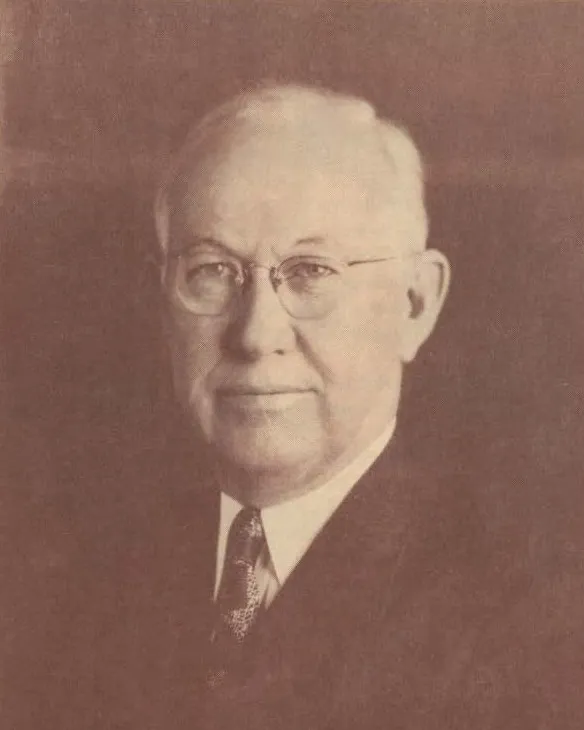
Robert E. Thomason
Historical Summary
Robert Ewing Thomason emerged as one of El Paso’s most influential public figures, shaping the city, Texas, and national policy across a long career in law, politics, and the federal judiciary. Born in Shelbyville, Tennessee, in 1879 and raised in Gainesville, Texas, he studied at Southwestern University and the University of Texas Law School before serving as county and district attorney. After moving to El Paso in 1912, he entered public life there and quickly rose to prominence.
Elected to the Texas House of Representatives in 1917, Thomason became Speaker of the House in 1920 after only one term, an unusual achievement. In the legislature he authored the Clean Election Law and supported appropriations for the College of Mines, later Texas Western College. His years in state government coincided with major reforms in Texas, including woman suffrage, workmen’s compensation, and the establishment of the State Highway Commission.
Thomason later ran for governor of Texas in 1922 and served as mayor of El Paso from 1927 to 1931. During his mayoralty, El Paso saw major industrial and civic development, including the establishment of natural gas and oil refining facilities, construction of the city’s first airport, installation of its first traffic lights, and planning and paving of the Rim Road Addition.
Elected to Congress in 1931 during the Great Depression, Thomason served for 17 years and became a leading member of the Military Affairs and later Armed Services Committee. He authored legislation establishing Big Bend National Park, Fort Bliss National Cemetery, and the Thomason Act, and he helped secure extensive military investment in and around El Paso. He was also active in efforts to strengthen national defense before and during World War II.
In 1947 President Harry S. Truman appointed Thomason United States District Judge for the Western District of Texas. On the bench he handled roughly 35,000 civil, criminal, and immigration cases across the El Paso, Pecos, and Del Rio divisions, including several high-profile matters, and naturalized about 9,000 new citizens. He retired as active judge in 1963 but continued serving as Senior Judge.
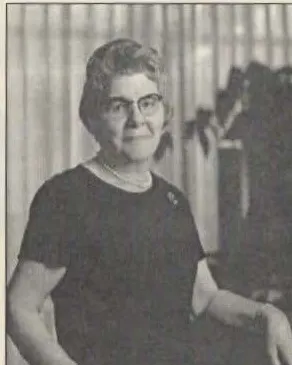
The account presents Thomason as a figure widely admired for patriotism, integrity, fairness, and public service. Tributes from Dwight D. Eisenhower, Harry S. Truman, Sam Rayburn, Lyndon Johnson, and other national leaders praised his judgment, loyalty, and contribution to the nation. The surrounding material also briefly honors Mrs. Schuster of El Paso for her civic leadership and promotion of goodwill between the United States and Mexico through organizations such as the Pan-American Round Table and the Southwestern Sun Carnival.
Document Transcription
ROBERT EWING THOMASON
Hall of Honor
to them briefly. One such activity took place in 1933-34 when she served as president of the El Paso County Medical Auxiliary.
In 1939 Mrs. Schuster gave a dinner and reception for officials of the Pan-American Round Table together with those of the Southwestern Sun Carnival Association. It was held in the ballroom of the Hotel Paso del Norte. This occasion was highlighted by messages from the President of the United States and the President of Mexico. Our own Congressman, the Honorable R. E. Thomason, delivered a message from Stephen Early, secretary to President Franklin Roosevelt, as follows: "The President asks me to send his cordial greetings to all who participate in the Sun Carnival, with best wishes that the celebration will promote friendship and good will and the spirit of the good neighbor." Elijas Colunga, Consul of Mexico, brought President Lázaro Cárdenas' congratulations. Our neighbors' President particularly expressed appreciation of Mrs. Schuster for the fomenting of friendly relations between Americans and Mexicans.
In 1945 at a celebration of the 25th anniversary of the founding of the Pan-American Round Table of El Paso, Mayor Dan Duke presented Mrs. Schuster with a key to the city, expressing gratitude for her unselfish devotion to El Paso and her promotion of international good will.
This brings to a close a feeble effort to portray the civic life of a talented and internationally minded lady who lived in El Paso from 1894 to 1946.
"Her children arise up, and call her blessed."
The Honorable Robert Ewing Thomason
by Richard C. White
There are a few gifted men whose lives read like a book, each chapter filled with new adventures and events and peopled with the great, the near great, the ordinary in a pageant crossing some of the brightest years of our great nation. Such a life has been that of Judge Robert Ewing Thomason. His life to date has spanned some of the richest and most critical periods in our country's history. He has been a part of it and, at various phases of his life, certainly helped guide in appreciable measure the course of our City, State and Nation.
Judge Thomason was born on May 30, 1879, in Shelbyville, Tennessee, like many another Texan of prominence, and then moved to Gainesville, Texas, when only one year old. His father was one of the pioneer doctors of North Texas. He attended public schools in Cooke County, Texas, and later was graduated from Southwestern University at Georgetown, Texas, from which school he also now holds an honorary LL.D. degree. He graduated from the law school of the University of Texas and returned to Gainesville where he was County and District Attorney for four years.
In 1912 he moved to El Paso for his health, where for many years he was a member of the law firm of Lea, McGrady, Thomason and Edwards. In 1917 the people of El Paso County elected him to the House of Representatives of the State of Texas, and after only one term, in 1920, he was unanimously elected Speaker of the House, an unprecedented achievement.
As a member of the State Legislature, he was the author of the Clean Election Law, requiring every voter to make out his own ballot and was very active in obtaining adequate appropriations for the newly established College of Mines, now Texas Western College. It was during his service in the Legislature and while speaker, that women were given the right to vote, the workmen's compensation law was passed, and the State Highway Commission was established.
In 1922 he became the only El Paso resident ever to run for the governorship of Texas in a very close race. In 1927 he was elected Mayor of El Paso against long-time entrenched opposition, and during his very successful term of office from 1927 through 1931 the El Paso Natural Gas Company, Standard Oil Refinery, Texas Company Refinery, and Phelps-Dodge Refinery were established in El Paso, and El Paso's first airport was built.
The first traffic lights were installed and Rim Road Addition was planned and paved. In 1931 during the dark days of the depression, he was elected to Congress where he served continuously for 17 years, until appointed United States District Judge for the Western District of Texas in 1947, by President Harry S. Truman.
As a freshman Congressman he was appointed to the important Military Affairs Committee and throughout his Congressional career contributed in innumerable ways to the economy of West Texas.
As Congressman he was author of the bill establishing Big Bend National Park, author of the bill establishing Fort Bliss National Cemetery, author of the Thomason Act to give qualified young reserve officers permanent commissions in the regular Army, and was active in obtaining many millions of dollars to build military installations in and around El Paso, now among the largest in the Nation. He was an outstanding member of the House Military Affairs Committee, and was in large measure responsible for the continued improvement of this area for a great military center. He also rendered outstanding service in his courageous and sometimes discouraging battle to prepare this Nation for the defense of freedom in World War II. At the time of his ascension to the bench for the United States District Court for the Western District of Texas, he was ranking member of the Armed Services Committee and a member of the joint Senate and House Committee on atomic energy.
As United States District Judge for the Western District of Texas, covering the El Paso, Pecos and Del Rio Divisions, Judge Thomason handled some 35,000 civil and criminal cases (including immigration). Many of the cases were of unusual importance. Among these were those of Clinton Jencks, alleged Communist, Leon Bearden, airlines hijacker; and Billie Sol Estes. He also naturalized 9,000 aliens.
On June 1, 1963, Judge Thomason retired, two days after his 84th birthday, and changed his status to that of Senior Judge. As Senior Judge, however, he is still active in the processing of many important and final legal matters in cases for the Western District of Texas.
Judge Thomason has been a long-time member of the First Presbyterian Church, and was Chairman of the Building Committee for the new Brown Street Church. He is a 33rd Degree Mason, a member of Kappa Sigma Fraternity, and also of the honorary legal fraternity, Phi Delta Phi.
His wife is Abbie Mann Thomason; his son William Ewing Thomason lives in Bryan, Texas; and his daughter, Isabelle Thomason Decherd lives in Dallas, Texas. He has five grandchildren.
On the occasion of the celebration of Judge Thomason's 80th Birthday, a telegram was received from President Dwight D. Eisenhower which read as follows: "I am delighted to learn of the honor being paid Judge R. Ewing Thomason, El Paso's First Citizen, and for years of outstanding and widely respected public service. For more than two decades I have prized the friendship of Judge Thomason when he was in Congress and as a senior member of the Committee on Military Affairs, and then of the new Armed Services Committee. All who knew him respected his sound judgment and objectivity, his ability and industry and his unswerving dedication to the Nation's security and welfare. The tributes being paid to him on his 80th birthday, so richly earned through his years of faithful service pleases me very much indeed. I gladly join in those tributes to my admired friend." Signed: Dwight D. Eisenhower. He also received congratulations from his close friend, former President Harry S. Truman.
The truest value of a man can be assessed by what others spontaneously say about him. I shall borrow from the Congressional Record of July 22, 1947, on the occasion of Congressman Thomason's resignation from the House of Representatives, wherein for seven sincere and warmhearted pages of recorded testimonial his colleagues, both Democrat and Republican, appraised his worth as a legislator, as a patriot, and as a man.
Congressman Sam Rayburn, later Speaker, said this of his friend: "He is the type and character of man who not only gives loyalty but elicits it from other people. . . . I have known many patriotic and outstanding Members of the House of Representatives, but I have never known one more patriotic, more outstanding in service, and love, and loyalty to his country than Ewing Thomason."
Congressman Andrews of New York stated: "During the long period of the war no member of this House or the Military Committee made a more direct contribution in ability, fidelity, and patriotism to the successful prosecution of the war."
Congressman Mahon of Texas stated: "It has been given to few men to serve mankind so well and so successfully. There is a reason for this—that reason can be found in his wholesomeness of character and personality, in the depth of his moral and intellectual integrity, in his innate sense of fairness, in his tremendous capacity for understanding his fellowman. All who know him recognize the fact that there is something about him which is indefinably fine—something which makes people love and respect him."
Congressman Lyndon Johnson of Texas, now President of the United States said: "Ewing Thomason's rugged honesty, great intellectual capacity, sturdy character, and unusual political acumen have permitted him to make a great contribution to his country's history."
Congressman Combs was prophetic and accurate in his remarks, when he said, "He is a learned lawyer who can understand and interpret the law, but what is even more valuable he has a deep sense of justice and right. He will dispense justice without bias. Rich and poor, the powerful and weak, will alike receive his just consideration. Added to all that is his vast capacity for human understanding and kindness which insures that he will never abuse the tremendous powers that will be lodged in his hands as a Federal Judge by using them arbitrarily."
Certainly as much as any man, in the paraphrase of the Hall of Honor criterion, Judge R. E. Thomason, outstanding man of character, vision, courage, and creative spirit, has consistently done the unusual which deserves to be recorded, and has made El Paso County better for having lived in it. He has influenced over a period of years the course of history of El Paso and brought honor and recognition to the El Paso community. He has directed us toward goals, and merits being remembered by all men as an exemplary guide to our future.