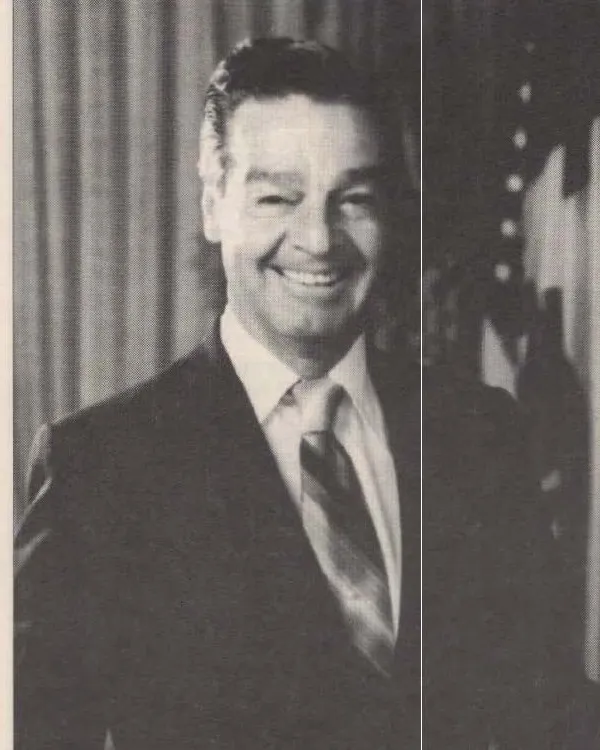
Frank Feuille III
Historical Summary
Frank Feuille III (1917–1984) was a prominent El Paso businessman, civic leader, naval officer, writer, and philanthropist whose career and public service made him one of the city’s most influential twentieth-century figures. Born in El Paso to Frank Feuille Jr. and Margaret Levy Feuille, he was educated at Dudley Grade School, El Paso High School, Texas Western College, and the University of Texas at Austin, earning honors throughout his studies. He married Mary Mitchell Feuille, with whom he had two sons, Frank Feuille IV and Richard Edmond Feuille.
During World War II, Feuille served more than four years in the United States Navy, took part in nine Pacific invasions, and later retired from the Naval Reserve as a lieutenant commander. After the war he built a distinguished business career, beginning with Standard Oil Company of Texas and advancing through major retail and supermarket positions before joining Newspaper Printing Corporation in 1970. He became its president and general manager, and in 1975 was named president and publisher of the El Paso Times, a post he held until retiring for health reasons in 1983. He also served as a bank director and led the Texas Daily Newspaper Association in 1982.
Deeply devoted to El Paso, Feuille played leading roles in a wide range of civic, cultural, charitable, and educational institutions. He served as president of the El Paso County Historical Society, the El Paso Art Museum, the City of El Paso Centennial Commission, the Armed Forces YMCA-USO, Goals for El Paso, and both the El Paso and Coronado country clubs, where his leadership was credited with rescuing them from financial difficulty. He also held officer or board positions in organizations including the El Paso Chamber of Commerce, United Way, Salvation Army, Junior Achievement, Goodwill Industries, the University of Texas at El Paso Development Board, Providence Memorial Hospital, M. D. Anderson Institute, and National Jewish Hospital.
Feuille was also an accomplished author and student of history. His historical novel The Cotton Road, published in 1954, drew on family history and the Civil War cotton route from Houston to Brownsville that helped evade the Union blockade; the book went through multiple printings and appeared in foreign translations. He also wrote short fiction, editorials, and worked on an unfinished novel about Simón Bolívar. Remembered as a patriotic, intellectually curious, and widely admired community figure, he was honored by El Paso during his lifetime, notably at “Frank’s Fiesta” in 1983, and was inducted into the El Paso County Historical Society Hall of Honor in 1996.
Document Transcription
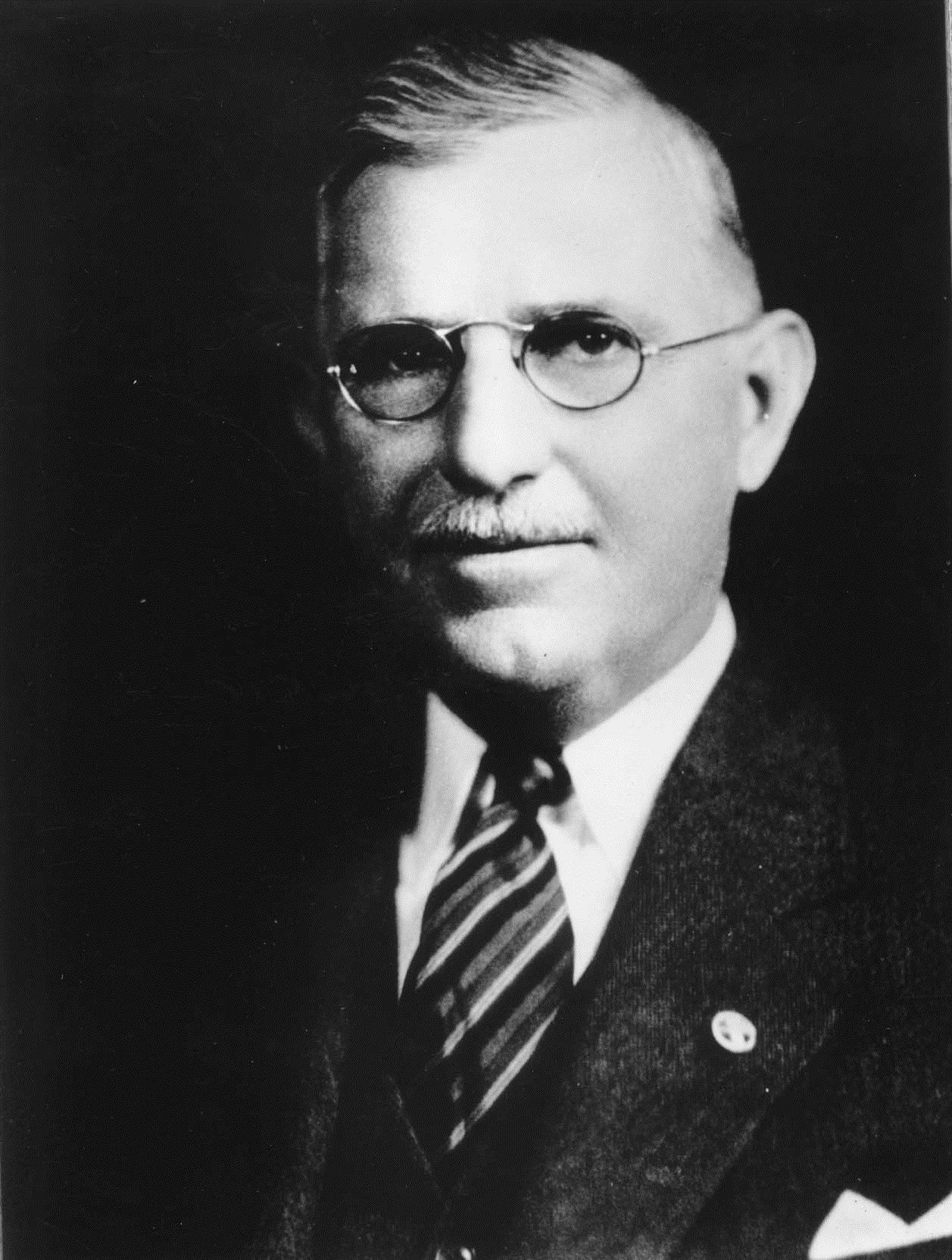
Frank Feuille, III, 1917–1984
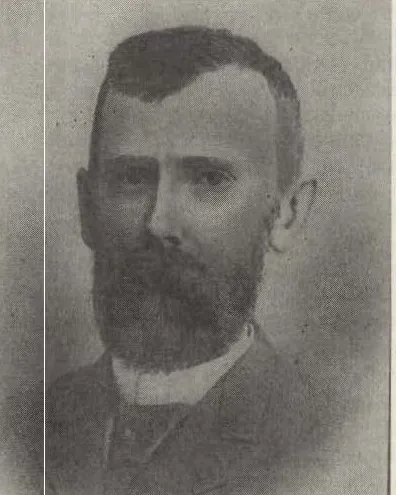
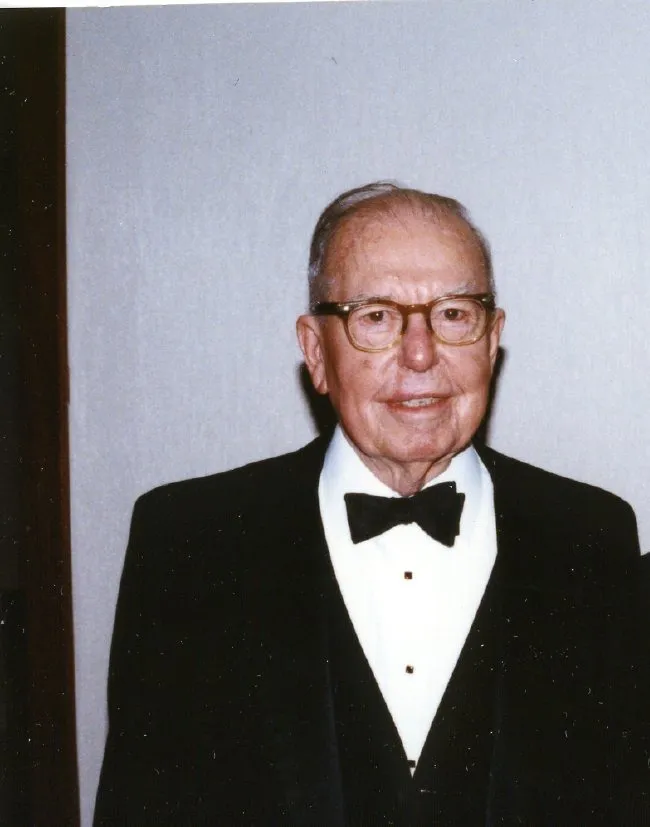
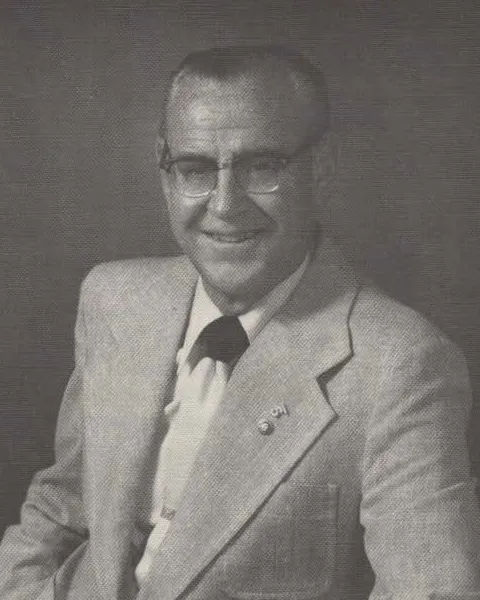
Photo courtesy El Paso County Historical Society
Hall of Honor, 1996
Tribute to Frank Feuille, III
By Richard H. Feuille
Frank Feuille, III was born in El Paso, Texas, on July 17, 1917, to Frank Feuille, Jr. and Margaret Levy Feuille. He died in October 1984, at the age of sixty-seven, survived by his wife of forty-plus years, Mary Mitchell Feuille, and his two sons, Frank Feuille, IV, who is with us tonight, and Richard Edmond Feuille, and four grandchildren. Frank's widow, Mary Mitchell Feuille, died in January 1990.
Frank was educated at Dudley Grade School, El Paso High School, Texas Western College, now the University of Texas at El Paso, and the University of Texas at Austin. He made honors grades at all of them.
Frank served over four years in the United States Navy during World War II and participated in nine Pacific Theater invasions. He was retired from the Naval Reserve after the war as Lieutenant Commander. He was a shipmate of George Bush, and they continued their friendship to the time of Frank's death.
Frank started his business career in El Paso as an accountant for Standard Oil Company of Texas, and then became successively the Merchandise Manager, Controller, and General Manager of the White House Department Stores. Next, he became Vice-President of the Food Mart supermarket chain in El Paso, and Senior Vice-President of the Shop Rite Foods of Albuquerque, a supermarket chain. In 1970 he became Business Manager of Newspaper Printing Corporation here, and then went on to become President and General Manager of that corporation. In 1975 he became President and Publisher of the El Paso Times and remained in that job until his health caused him to retire in March 1983, at the very pinnacle of his career. He was one of the most influential men in all El Paso. During Frank's tenure with the newspaper, he also served as Director of First State Bank and as Director of Southern Production Program/Newspaper Research Center. He distinguished himself even further when he served as president of the Texas Daily Newspaper Association in 1982, heading an organization of ninety-five publishers in Texas, Louisiana, New Mexico, Arkansas, and Oklahoma.
Frank was an El Pasoan through and through, and though he could have lived and worked successfully almost anywhere in the United States, he chose to live in El Paso and to remain here all his life because he really loved El Paso. As far as he was concerned, there was no other place in the world to live, and he evidenced his love of El Paso by his tremendous involvement in civic and community affairs in El Paso. For example, he served as president of the following organizations: the El Paso County Historical Society; the El Paso Art Museum; City of El Paso Centennial Commission; Armed Forces YMCA-USO; and Goals for El Paso. He also served as president of the El Paso Country Club, and then as president of the Coronado Country Club when each of them was on the brink of financial ruin. Many persons have told me it was Frank's leadership and vision that saved both of those clubs.
He also served as an officer and/or director of the following organizations here in El Paso: The El Paso Chamber of Commerce; Southwestern Sun Carnival Association; El Paso Bicentennial Commission; United Way of El Paso; Salvation Army; Junior Achievement; Child Crisis Center; Lighthouse for the Blind; Goodwill Industries; University of Texas at El Paso Development Board; Distributive Education Advisory Board; Science Advisory Board; Family Services; El Paso Community Foundation; El Paso Cancer Treatment Center; El Paso Industrial Development Corporation; and, one of his greatest loves, Providence Memorial Hospital. He also served on the boards of the El Paso Club, the El Paso Tennis Club, and Southwestern Athletic. He also served on such out-of-town hospital boards as M. D. Anderson Institute in Houston, and National Jewish Hospital in Denver.
Yes, Frank had a real heart for the poor, the hurt, the sick, the downtrodden, the underprivileged, the hungry, and the unfortunate, and his service to all of those organizations simply emphasized that.
Almost to the time of his death, Frank played tennis and golf on a regular basis. He loved sports, especially football. He was not only an avid football fan, but he also was a running back for the B-team at El Paso High School and for the Freshman team at Texas Western College. In his spare time, he was an avid student of history, particularly the history of the United States, Texas, Mexico, and South America. He was a writer. His historical novel, The Cotton Road, first published by the Morrow Company of New York in 1954, went into multiple printings in the United States and into three foreign translations. For some time before his death he had been working on a historical novel about Simon Bolivar, the George Washington of South America, and I would hope that someday someone will complete that novel for Frank. He also wrote a short story about his grandfather entitled “M'sieur Le Judge,” and, of course, during his tenure as President and Publisher of the El Paso Times, he frequently wrote editorials.
As I have said, Frank was a born and bred El Pasoan; he loved El Paso, and I really believe (and not because he was my brother) that he was one of the very best men who has ever lived in El Paso. Even while he was still alive, many people whom I did not even know would come up to me and ask me how Frank was and tell me that they had worked with Frank, or for Frank, and that he was the best man that they had ever worked under, and that they really missed him. Since he died, even more people have told me the same thing. Frank not only loved El Paso, he loved his state and his country. He was just about the most patriotic person I have ever known. I really believe that in his heart of hearts, he really wanted to be a career Army or Navy officer, and that he loved being in the Navy and being in combat and serving his beloved country in that war. Frank also believed in family and loved his family: his beloved mother, Margaret Levy Feuille, his five brothers and sisters, his wife, his children, his grandchildren, his aunts, uncles, nieces, nephews, cousins, and his in-laws on all sides of his large family.
Frank was honored many times while he was alive. The last time was when he was honored by the entire community of El Paso in a very big event called “Frank's Fiesta,” which was held here in the El Paso Country Club in April 1983, shortly after his retirement from the newspapers. Yes, Frank Feuille, III was truly an outstanding and respected citizen of El Paso, a businessman and philanthropist who gave his resources and energy to make El Paso a better place in which to live. I am tremendously proud and was greatly privileged to have been his brother.
Tribute to Frank Feuille, III
By Frank Feuille, IV
On behalf of my father, I would like to thank you for bestowing this wonderful honor on him. He loved the El Paso County Historical Society and was proud to serve as its president in 1957. He would be especially happy and proud to have been inducted into the Hall of Honor at the same time as his dear friend, Peter de Wetter. My parents loved, admired, and respected both Peter and Mardee and cherished their friendship. My mother saved every Christmas card she received from Peter and Mardee, personalized with poetry or verse composed by Mardee. Elizabeth and I are lucky enough to have Peter and Mardee as friends and as neighbors on the same street.
I would like to thank Louise Schuessler for nominating my father for this honor and to thank Margaret Marsh for her tireless efforts in coordinating all the reservations.
The El Paso County Historical Society has such a rich heritage. Paul Heisig and Louise Schuessler were the lifeblood of this organization at its inception. Businessmen like Chris Fox, Leonard Goodman, Jack Guynes, and Harvey Meston infused it with its energy. Scholars like Dr. C. L. Sonnichsen, Dr. Joe Leach, Dr. Eugene Porter, and Dr. Haldeen Braddy, contributed scholarly articles to its quarterly publication, Password.
My father loved, and was fascinated by, history. He understood the importance of research in the archives to ensure accuracy and historical perspective. He enjoyed reading correspondence written by historically significant individuals because it gave him insight into their character and their emotions. He especially enjoyed the Sunday afternoons he would spend with his grandfather, Judge Frank Feuille, who practiced law and lived everywhere on the globe. He died at the age of ninety-four here in El Paso. His mind was still keen at the time of his death. He delivered the commencement address at the University of Texas Law School at the age of ninety-two. On our Sunday visits, he regaled us with talks about an almost-forgotten chapter in the Civil War. He talked of a time when cotton, arriving by ship at
HALL OF HONOR
31
Galveston, was transported by horse and wagon train on an unmapped route from Houston to Brownsville on the "Cotton Road"—the only loophole left in the Union blockade and the South's last hope for getting raw cotton to the hungry cotton looms of Europe. My father wrote The Cotton Road in 1954 and dedicated the book to his grandfather: "The character of Captain Achilles in the book was based on my father's great-grandfather, who was lost at sea off the Texas coast while trying to run the blockade of 1862."
My father enjoyed being the publisher of The El Paso Times and was passionate about the First Amendment. He believed that every issue had two sides. He always expressed his opinions in a logical, articulate, and persuasive manner—but welcomed contrary opinions and ideas.
It would please him to be here tonight, to look around the room and see so many of his family and friends whom he loved so much. You miss him and I miss him. I close by expressing the same sentiments about my father that he expresses about his grandfather in the dedication of his book: "It is a proof of God's greatness that such a man dwelt among us."