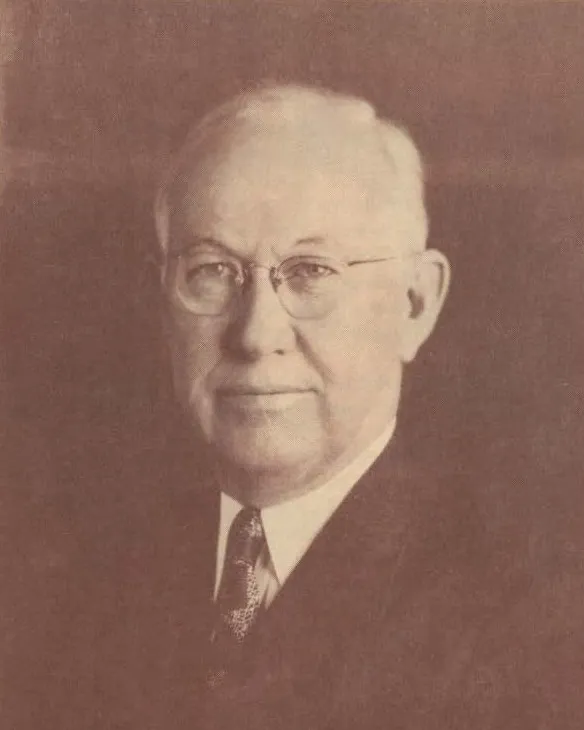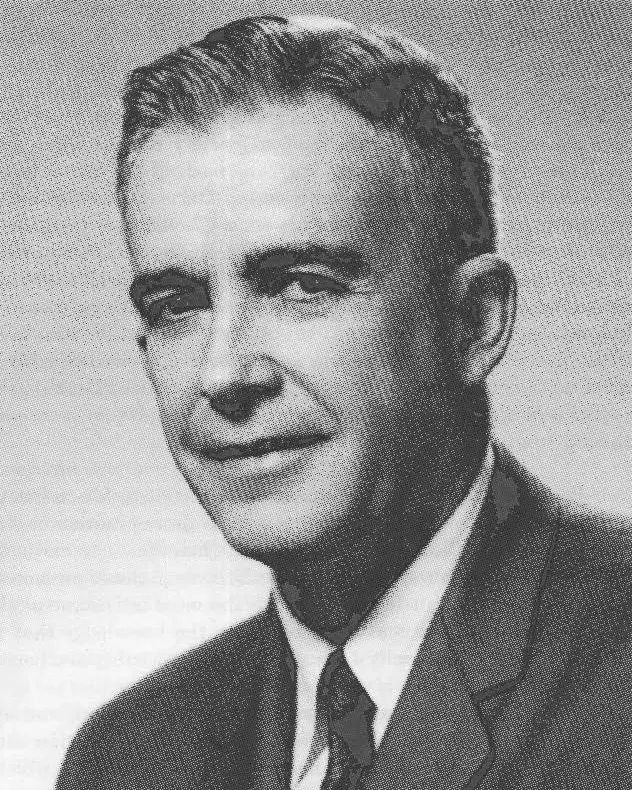
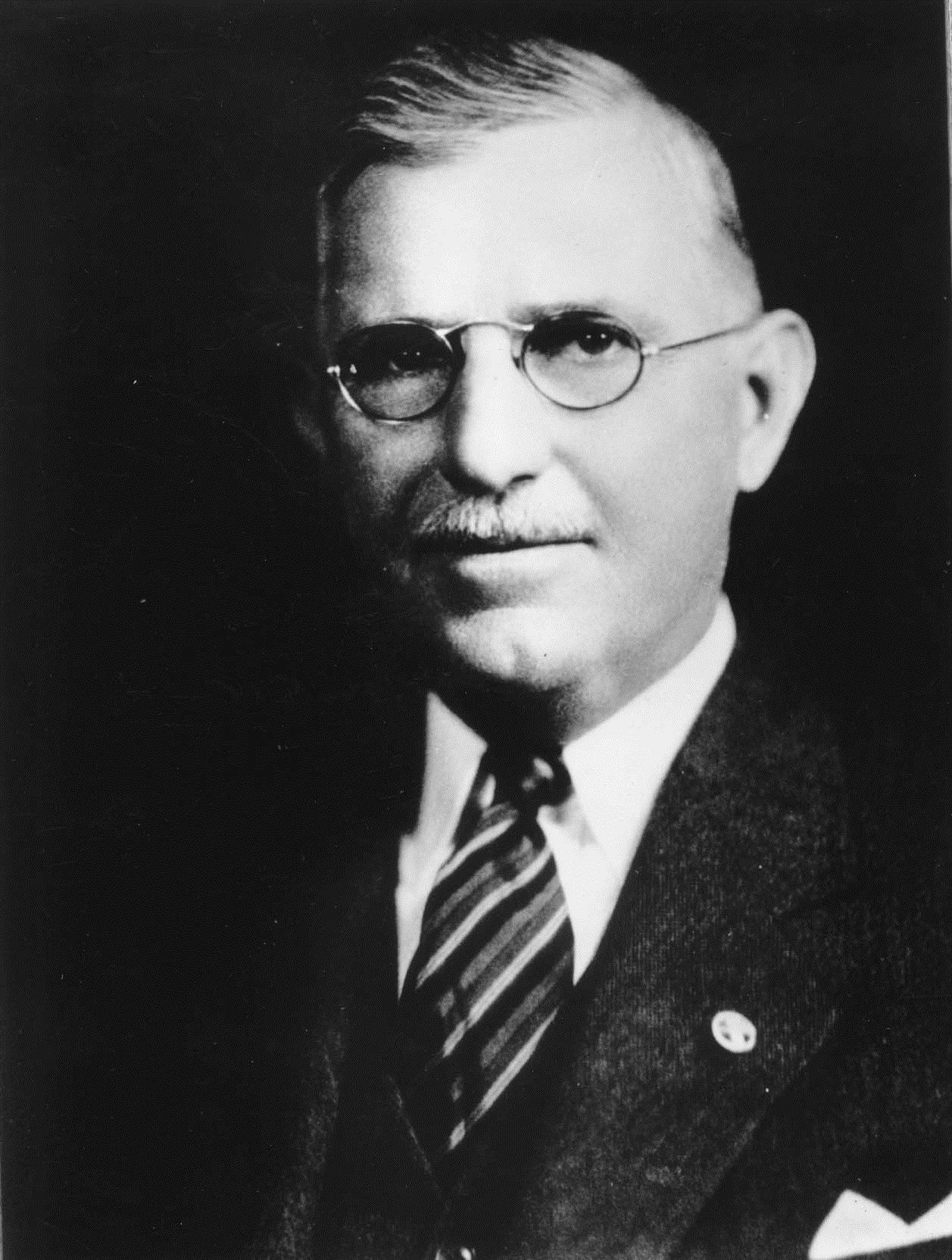
Lawrence M. Lawson
Historical Summary
Lawrence Milton Lawson (1879–) emerged as a central figure in the development of water management and international river diplomacy along the United States–Mexico border, especially in the El Paso region. Born in Washington, D.C., he began his career with the United States Reclamation Service and came to El Paso in 1913 as engineer in charge of the Federal Irrigation Project. Appointed Rio Grande Project Manager in 1917, he helped build the 160,000-acre Rio Grande Irrigation Project, overseeing dams, canals, laterals, and drainage works that transformed the valley’s agriculture and generated immense economic returns.
Lawson also played an important role in El Paso’s municipal water planning as chairman of the city’s first Water Board. He urged city leaders to secure Rio Grande water rights for El Paso, anticipating the future needs of a growing urban center in the Southwest.
In 1927 he became Commissioner of the United States Section of the International Boundary and Water Commission, beginning a long career that combined engineering expertise with diplomacy. Working jointly with Mexican engineers, he directed the rectification of the Rio Grande below El Paso and Juárez, stabilizing the international boundary, reducing flood danger, improving drainage in El Paso, and opening land for development, including the area that became Ascarate Park.
Lawson also conceived and directed the canalization of the Rio Grande from El Paso to Caballo Dam between 1938 and 1943, improving flood control and helping the United States meet its obligations under the 1906 treaty with Mexico. He further oversaw the planning and construction of the American Diversion Dam and the American Canal. In 1938 he served as United States Commissioner on the joint Agrarian Claims Commission, evaluating American agricultural properties expropriated under Mexican agrarian reform.
His broader international legacy included major work toward the 1944 Water Treaty between the United States and Mexico, which governed the division of Rio Grande waters below El Paso and addressed Colorado River distribution. That treaty led to projects such as Falcon Dam below Laredo, the planned Amistad Dam near Del Rio, and Mexico’s Morelos Dam near Yuma. Honored by the U.S. Department of State, the American Society of Civil Engineers, and the El Paso Historical Society, Lawson was celebrated for more than fifty years of service in turning arid borderlands into productive and cooperative landscapes.
The document also includes a notice from the El Paso Historical Society concerning back issues of PASSWORD, its historical journal. Because early issues had become scarce, especially Volume I, Number 1, the Society arranged a facsimile reprint; collectors could distinguish it by the absence of the hyphen originally used in the title PASS-WORD.
Document Transcription
LAWRENCE M. LAWSON
Biographical Sketch of Lawrence M. Lawson
by Conrey Bryson
As the first living member to have his name inscribed in the El Paso Hall of Honor, the El Paso Historical Society proudly pays tribute to a man who has been honored by his country's Department of State in these words: "It is to his credit today the Mexican border can be cited to the world as a living example of the ability of free people to solve mutual problems on a friendly basis."
Couple this award with that of the American Society of Civil Engineers, which named him an Honorary Member in 1943, an honor limited to fewer than 40 men out of a membership of more than twenty thousand, and we realize more fully how one man has combined the fields of engineering and diplomacy for the lasting benefit of our portion of the hemisphere.
Lawrence Milton Lawson was born on January 8, 1879, in Washington, D. C. His career is divided into two related phases, both of which relate to one of the most precious and vital of all our natural resources, water. His career with the United States Reclamation Service, Department of the Interior, began with the birth of that service back in the Theodore Roosevelt administration. In 1913, while Elephant Butte Reservoir was still under construction, Mr. Lawson came to El Paso as Engineer in charge of the Federal Irrigation Project. In 1917, he was appointed Rio Grande Project Manager, and served in this capacity until June of 1927. He may well be considered one of the fathers of the 160-thousand-acre Rio Grande Irrigation Project, situated along the river above and below El Paso. Under his direction, the Project was developed—several dams were constructed, and the extensive system of main canals, laterals, and drainage ditches planned and constructed. Through his skill in working with and for the people of these valleys, an irrigation system has been developed which has brought cash returns to this area of about one billion dollars—from original construction costs of about fifteen million.
But his concern was not merely with the irrigator. He was the chairman of the first Water Board of the City of El Paso. Foreseeing a great city here at the crossroads of the Southwest, he took many steps to help assure us of a plentiful water supply for its development. Before the water rights of the Rio Grande Project had all been allotted, Mr. Lawson appeared before two El Paso City Councils and urged them to have the City declared a part of the Rio Grande Project. Unfortunately, it seemed to some that El Paso had an endless supply of well water, and would never need the waters of the river. Today, we recognize Mr. Lawson's far-seeing wisdom.
In 1927, the second phase of his career began when the President of the United States named him Commissioner of the United States Section, International Boundary and Water Commission. Here his talents as both engineer and diplomat were to be effective for the next quarter century. Together with engineers for Mexico, Mr. Lawson conceived, planned, and directed the joint project for rectification of the Rio Grande below El Paso and Juarez. This project stabilized the river boundary, eliminating the seeds of future international disputes, and at the same time protected both cities and the adjoining irrigation lands from floods. It removed serious drainage problems in the city of El Paso, made possible the development of Ascarate Park, and permitted the development of thousands of acres of what was once river-bottom land.
The Rectification Project represents the results of Mr. Lawson's years of careful study and planning for the safety and welfare of the people of this area, beginning when he was Project Engineer under the Reclamation Service.
Mr. Lawson conceived, planned, and directed the canalization of the Rio Grande above El Paso for 110 miles to Caballo Dam, to facilitate compliance by the United States with the terms of the 1906 Treaty for delivery of waters to Mexico. This project, constructed in the years 1938 to 1943, provides an improved channel with flanking levees to contain flood waters for protection of the highly developed irrigation project lands in the Mesilla, Rincon, and Palomas Valleys and has brought about material savings in water, with increased efficiency in operations of the irrigation project. To further facilitate compliance with the 1906 treaty, Mr. Lawson directed the planning, design, and construction of the American Diversion Dam and the American Canal.
Again, combining engineering and diplomacy, he served in 1938 as United States Commissioner of the joint Agrarian Claims Commission, to appraise the value of American agricultural properties expropriated under the Mexican Agrarian Law. His work was praised on both sides of our friendly border.
Mr. Lawson's work, of course, went far beyond the El Paso area. The 1944 Water Treaty with Mexico was the product of patient and ceaseless labor, largely on his part, on behalf of the United States. This treaty provided for division, between the United States and Mexico, of the Rio Grande waters below the El Paso Valley. The treaty brought into being the great Falcon Dam on the Rio Grande below Laredo, Texas, completed in 1953, and the planning of a second major international dam, the Amistad Dam near Del Rio, now in the design stages. The same treaty, negotiated in large measure by Mr. Lawson, provided for distribution of the waters of the Colorado and construction by Mexico of the Morelos Dam, near Yuma, Arizona.
Many other projects, small and large, have blossomed under his direction, making life along the international boundary and its rivers more abundant; and removing the causes of international tensions before they became serious.
For more than half a century of service in helping to fulfill the Biblical prophecy that the "desert shall rejoice and blossom as the rose," the El Paso Historical Society proudly inscribes the name of Lawrence Milton Lawson in its Hall of Honor.
Back Numbers—Complete File
PASSWORD is becoming recognized as a journal of important historical material desired by libraries and colleges for reference and research. Many of these libraries were not members when the first volumes were published and now desire back numbers so that they can maintain a complete file.
The secretary has a limited number of the early issues but since they are scarce, a premium price is justified. Single numbers of Volumes I and II are priced at $3.50 each. Subsequent numbers are priced at $1.25 each, or $5 per volume, to those becoming members. Hence, a complete file of the six volumes now published costs $48.
In a spurt of enthusiasm, when the Society was organized in 1956, the Number One issue evaporated. The officers handed out copies to attract members and advertise the Society with pride. Soon there were no copies of Volume I, Number 1, available for new members desiring to maintain a complete file. Consequently, special arrangements were made by the Editors to reprint a facsimile edition of the scarce No. 1.
Bibliophiles and sharp collectors can distinguish the reprint by the omission of the hyphen in PASS-WORD on the front cover. The PASSWORD title was first used with the hyphen but this was simplified in Volume III and thereafter.