
James Wiley Magoffin
Historical Summary
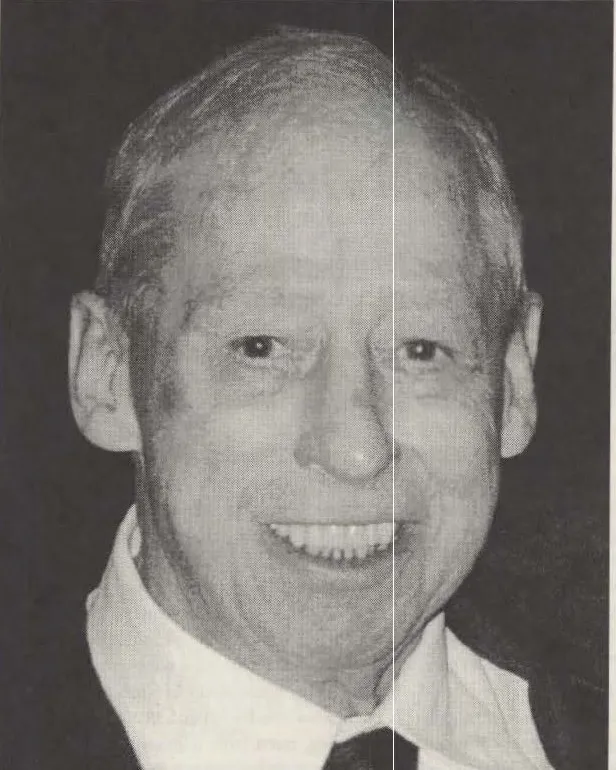
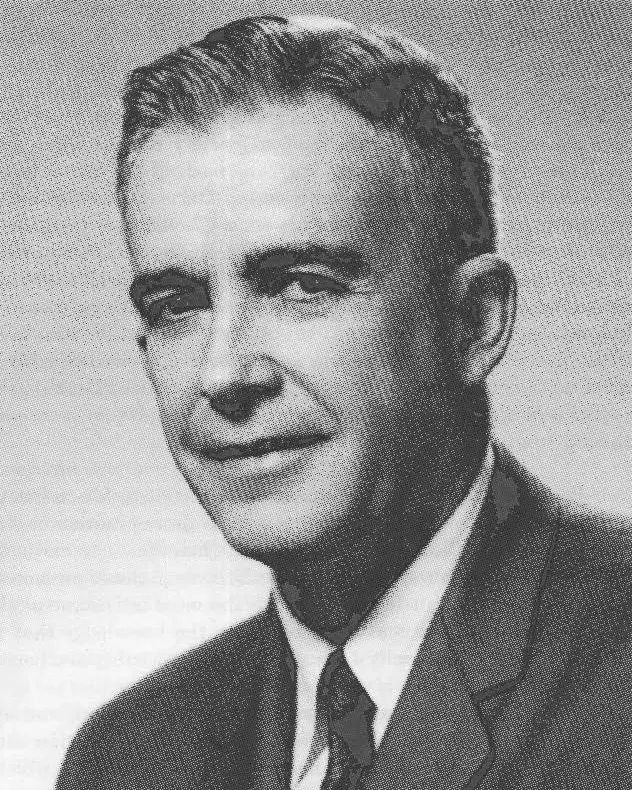
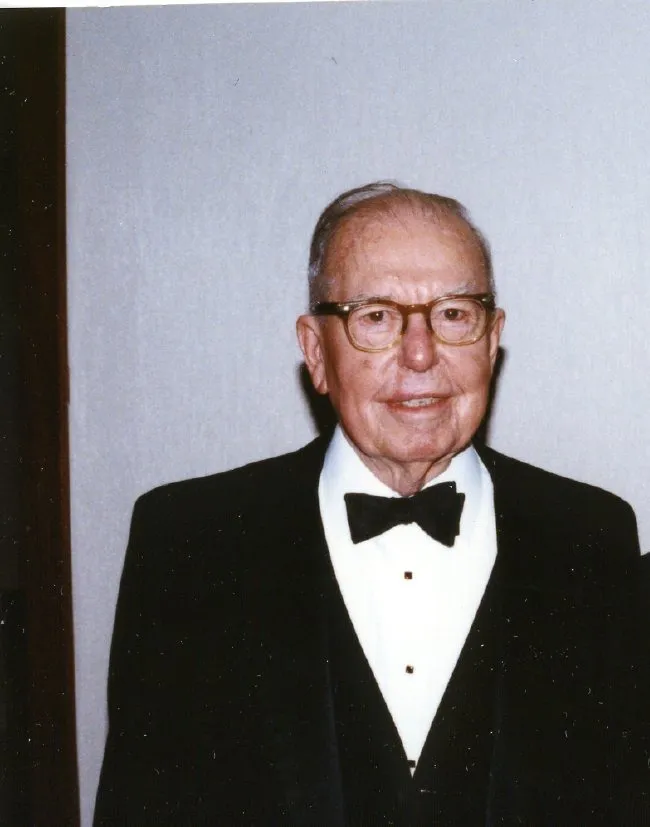
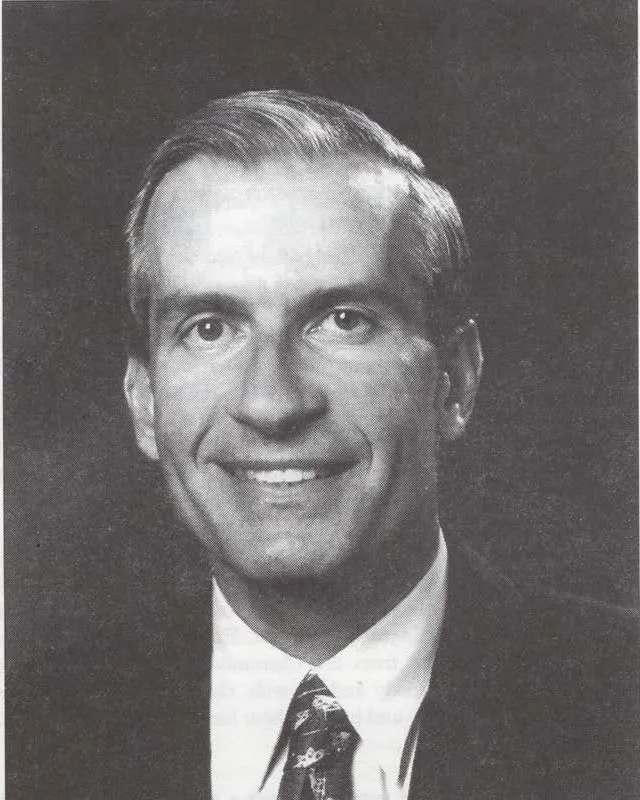
James Wiley Magoffin, born in Harrodsburg, Kentucky, in 1799 to an influential Irish immigrant family, became one of the most prominent and colorful founders of the American settlements that developed into El Paso. Literate, adventurous, and commercially gifted, he built wealth through the overland trade between Missouri, Santa Fe, and Chihuahua, served as a United States consul in northern Mexico, and married Maria Gertrudis Valdez of Chihuahua in 1830.
During the Mexican-American War, Magoffin was recruited through the influence of Senator Thomas H. Benton and sent by President James K. Polk to help secure a bloodless American occupation of New Mexico. Working alongside Col. Stephen Watts Kearny’s expedition, and aided by his familiarity with regional leaders such as Gov. Manuel Armijo, Magoffin helped prevent a battle at Santa Fe in 1846 by persuading Mexican authorities not to resist. His efforts likely averted immediate bloodshed, though later unrest in New Mexico contributed to the Taos Revolt.
After attempting similar diplomacy farther south, Magoffin was arrested at El Paso del Norte and imprisoned in Chihuahua and Durango until the war’s end, surviving through bribery and personal expense. Although Congress appropriated compensation for his services, he ultimately received less than first proposed. After the war he settled on the American side of the Rio Grande opposite El Paso del Norte and established Magoffinsville around 1849 near present-day Magoffin Avenue, where a substantial settlement grew.
Magoffinsville became an important early center of American El Paso. Boundary commissioner John R. Bartlett praised the site in 1850, and in 1852 the military post later known as Fort Bliss was moved onto Magoffin’s property. In the years before the Civil War, Magoffin supported secession, while his son Joseph served the Confederacy in New Mexico and later as a Confederate quartermaster. Despite wartime confiscations, flood damage, and family losses, Magoffin remained influential until his death in San Antonio in 1868. Joseph Magoffin later recovered the family estate, helped guide El Paso’s growth by selling land for development, and served four times as mayor as Magoffinsville and El Paso merged.
The page also preserves two local anecdotes from El Paso’s past. One recounts the legend of “Emma,” a famed beauty of the city’s dance hall underworld whose body was reportedly removed by her family after death from smallpox, leaving behind an empty grave in an old cemetery in the Mundy Heights area. Another tells of J. B. Fitch, editor of The El Paso Tribune, who was horsewhipped in 1896 by Mrs. George Darrow after a disparaging item about a “blonde shooting gallery woman” appeared in his paper, though the offending paragraph had reportedly been inserted without Fitch’s knowledge.
Document Transcription
Sunday, April 29, 1956
Page 4-B Dial 2-1661
Magoffin Paved Way Occupation; Founded
James Wiley Magoffin was a man with a twinkle in his eye, wealth in his pocket and destiny in his makeup.
And one time he held several hundred lives in the palm of his hand.
Magoffin is easily the most colorful of the four men who founded the isolated American communities which grew into El Paso.
Born in the frontier town of Harrodsburg, Ky., in 1799, Magoffin was the son of Irish immigrants whose family developed into one of the leading ones of the state.
James was very literate and quite adventurous, both of which attributes proved valuable to him in making his fortune in Mexico and the American West.
At least one biographer reports he was in Saltillo in 1824—then but 25 years old—and was the first American consul in that place.
Another puts him in Chihuahua City in 1825, and there can be no doubt he was first U.S. consul there. He may also have served as consul in Durango.
Realizing the profit to be made in the overland trade from Missouri to Chihuahua via Santa Fe, N.M., Magoffin early engaged in this trade and soon amassed considerable wealth.
In 1830 he married Maria Gertrudis Valdez, beautiful and charming daughter of prominent Chihuahuans, and through the 1830s continued to prosper on the increasing tide of American trade goods.
BROTHER JOINS HIM
His brother, Samuel Magoffin, joined him in the enterprise and both did well, James gaining fame as a generous and gracious host.
In 1844 James took his wife and family to Independence, Mo., to live, continuing to run his Santa Fe and Chihuahua trade business from the Missouri River city.
The next year Mrs. Magoffin died. James took his sons, Joseph and Samuel, on a tour of the cities of the East, and then to Lexington, Ky., where he put them in boarding school. Their sisters were placed in a St. Louis convent under the watchful eye of relatives.
James had become, by this time, a fast friend of Missouri's Sen. Thomas H. Benton and as the Mexican War neared Benton summoned Magoffin to Washington.
Wrote Bernard DeVoto in Year of Decision, 1846:
“James W. Magoffin got that message on May 25, and on the evening of June 15, Benton was introducing him to the President at the White House.
“Polk, hoping for a bloodless conquest, thus got the services of the most sagacious man in the province he intended to invade. (New Mexico) ... He knew more about that country, probably, than anyone else who could have been found.”
DeVoto also described Magoffin:
“He was a good deal of a man—tall, opulent in looks and behavior, an epicure, a wit, extremely companionable, and much admired by the Mexican officials, who liked his wines and anecdotes and called him ‘Don Santiago.’”
War had been declared April 25, 1846, and fighting was underway in the Lower Rio Grande Valley. An expedition for New Mexico, the northwestern part of Mexico and possibly California, was outfitting in Missouri under Col. Stephen Watts Kearny.
With this expedition were the 1st Missouri Volunteers under Col. Alexander Doniphan, for whom El Paso's Doniphan Drive is named.
While James W. Magoffin was in the East, the Army and the annual trade caravan left the Missouri for Santa Fe. With them were 14 big wagons in which Magoffin was interested and under the care of his brother, Samuel.
Samuel was accompanied by his 18-year-old bride of six months, Susan Shelby Magoffin, whose journal of the trying trip is one of the most fascinating yet published on the difficulties of the Santa Fe Trail.
Polk's plan for Magoffin was to attempt to subvert the New Mexican leaders if possible and induce a surrender without bloodshed.
LETTER TO KEARNY
Armed with a letter to Col. Kearny which commanded the Army to aid him in his undertaking, Magoffin set out after the column in a carriage well laden with claret wine but somewhat short of brandy.
Magoffin arrived at Bent's Fort on the Arkansas River in Colorado July 26 and probably confided to his brother his mission, since Susan Shelby Magoffin wrote in her diary Aug. 18 that “a negotiation is being carried on between the two generals through Brother James, who has the confidence of the Mexican general so completely, we may look for pleasant results...”
Magoffin wrote Secretary of War W. L. Marcy that he, Capt. (Philip St. George) Cooke and 12 dragoons had left Bent's Aug. 1 for Santa Fe and that he delivered a letter from Kearny to New Mexico Gov. Manuel Armijo on the 12th of that month.
David Lavender in Bent's Fort pointed out that a pack-mule threw off its load and caused delay in starting but that Magoffin used the lost time philosophically, sending his servant on vain efforts to trade wine for brandy.
COOKE LIKED MAGOFFIN
Cooke, also used to gentle living prior to his rugged and justly famed Army service in the West, became very fond of Magoffin.
Prior to riding into Santa Fe, Magoffin took leave of Cooke and the dragoons and went about his work without obvious connection with the Army.
Governor of the province of New Mexico, Manuel Armijo, was a petty tyrant who was liked little better by his own people than by the luckless Texan members of the Santa Fe Expedition whom he had treated so cruelly a few years earlier.
Armijo's provincial vanity is well known. During the 1840s he dreamed of becoming ruler of all northern Mexico. Many historians feel he might have accomplished his ambition if the United States had not intervened. After the bloodless conquest of New Mexico, however, his ambition switched payment of the United States government.
In Chihuahua City, Magoffin could have talked Armijo of much business, knowing him as a man who was interested in money, fine wines and ambition.
As Kearny's letter to Armijo said the Americans claimed only that part of New Mexico east of the Rio Grande, Magoffin pointed out to Armijo that he might set himself up as governor of the western portion of the country, or that he might accept an official appointment in the American occupation under Kearny.
It is certain that Magoffin was sincere in his belief the U.S. would not occupy Western New Mexico. Kearny, however, had secret orders to the contrary. Had he taken Magoffin's suggestion and appointed Archuleta to a civil post, as there is evidence he intended to do, a tragedy might have been averted.
Still, a tragedy was averted by Magoffin's efforts, because the Battle of Santa Fe, which should have taken place, did not. A narrow defile northwest of Santa Fe was prepared with works for defense by Armijo, but the undercover agent's work was so keen no shot was fired.
When American troops marched on across Western New Mexico, however, and Archuleta had no appointment in the American service, he became indignant and fostered the notorious Taos Revolt, which resulted in much bloodshed before Col. Sterling Price's 2nd Missouri Volunteers put it down.
With the Santa Fe success behind him, Magoffin headed south for an attempt to do the same thing in Chihuahua City, which he had accomplished in Santa Fe.
MADE PRISONER
Taken prisoner in El Paso del Norte (Juarez) because of his suspected but unproven part in the Santa Fe surrender, Magoffin was sent to prison in Chihuahua City and remained there in captivity until Doniphan's Missourians took the city after the Battle of Sacramento.
Magoffin then was hied off to prolonged captivity in Durango, where he remained until the end of the war, buying his life, apparently, with bribes and champagne.
He later said he spent $3,000 for wine during his imprisonment in the two Mexican cities.
After the war, the retiring President Polk's Senate appropriated $50,000 for Magoffin in appreciation, but underlings of Polk's successor, President Zachary Taylor, quibbled about the amount and eventually awarded Magoffin but $30,000, to which payment he made no protest.
During the negotiations he was asked to submit an expense account in which he included:
“Sufferings:
“Nine months imprisonment in Chihuahua and Durango. Can't be estimated.”
After the war, Magoffin obtained lands on the newly won American bank of the Rio Grande opposite El Paso del Norte and about 1849 established a home for himself and his family.
It was at about the present intersection of Willow Street and Magoffin Avenue and around it a considerable settlement grew up, coming to be known as Magoffinsville.
Boundary Commissioner John R. Bartlett headquartered in Magoffinsville and was himself the guest of Magoffin for some time during 1850. Bartlett, who became a fast friend of Magoffin, wrote in his Personal Narrative of the town:
“Its enterprising proprietor has erected around a large open square some of the best buildings in the country, which are now occupied as stores and warehouses. This is an admirable situation for a town, and will, no doubt, be the centre of the American settlements at El Paso.”
In 1852 the military post at El Paso was moved to Magoffinsville. It was named Ft. Bliss for the first time during the period the post was maintained on Magoffin's property.
On his return trip, late in 1852, Bartlett and his entourage paused long enough for one of his party to paint portraits of both the commissioner and Magoffin. Both portraits remain intact in the home of Gen. and Mrs. W. J. Glasgow, 1104 Magoffin Ave.
With the approach of the Civil War, Kentuckian Magoffin was active in the work of secession and with other prominent El Pasoans, including his friend, Simeon Hart, he lent heavily of his personal fortune and his services to the war.
JOSEPH IN NEW MEXICO
Joseph Magoffin, first as a captain and later as a major, accompanied the rebel invasion of New Mexico and later served as chief quartermaster for the Confederate district west of the Mississippi River.
His lands confiscated at the close of the war and his home and settlement severely damaged by Rio Grande floods, James Magoffin remained of good cheer until his death in San Antonio in 1868.
His other son, Samuel, had died in Confederate uniform in the Deep South.
Joseph Magoffin regained title to his father's estate and was a leading light in the town in the tough years between the war and the coming of the railroads and afterward until his death in 1923.
To meet the needs of the growing city, Joseph sold land to developers and watched the hamlets grow until El Paso and Magoffinsville were one, and he was four times mayor of both.
Once asked if it would not be more profitable to hold onto his land until the town's growth made it more valuable, the venerable Judge Magoffin replied that if he did not sell land the town could not grow.
Emma's Grave Stands Empty, Unknown
Somewhere in Mundy Heights, in an old cemetery which now probably is covered with buildings, is an empty grave which was dug for a legendary lady known as “Emma.”
A researcher for The Times' 50 Years of Progress Edition published in May, 1923, turned up the story when he was seeking out the sites of abandoned graveyards.
Said his story:
“Emma, said to have been the most beautiful girl in the entire country in the early days, arrived here from the east. She gradually drifted into the wild dance and gambling hall life of the Pass City and for years ruled the underworld and its visitors with her beauty, charming manners and quick wit. She became famous throughout the west. Cowboys and miners carried her picture into the desolate, solitary sections where they were working.
“Then one day she became sick with smallpox. She partially recovered, but when she saw her face in the mirror, and realized that her beauty was forever gone, she fainted and never again recovered consciousness. It is said that her brother, an attorney from Illinois, hearing of her death, had the body removed to her home town, where she was reburied with great ceremony and mourned by many friends of her childhood.”
El Paso's rugged oldtimers must have thought something of the dance hall beauty, also, the writer observed. Over her grave, before the body was moved, they placed a stone marked:
“Sacred to the Memory of Emma.”
Innocent Tribune Editor Horsewhipped
J. B. Fitch, editor in 1896 of The El Paso Tribune, probably was a firm believer in the law that says guilt must be firmly established before punishment is meted out.
Fitch was horsewhipped by an irate Tribune reader.
According to The El Paso Times of Jan. 29, 1896, the Tribune carried a story saying: “The blonde shooting gallery woman seems to have captured a number of our married men. Look out for a hair-pulling scrap.”
The Times account continued to the effect that the blonde, one Mrs. George Darrow, took offense, bought a quirt and worked the “fat editor” of The Tribune over with it.
Only later was it established that another man had written the paragraph and slipped it in the paper without Fitch's knowledge.