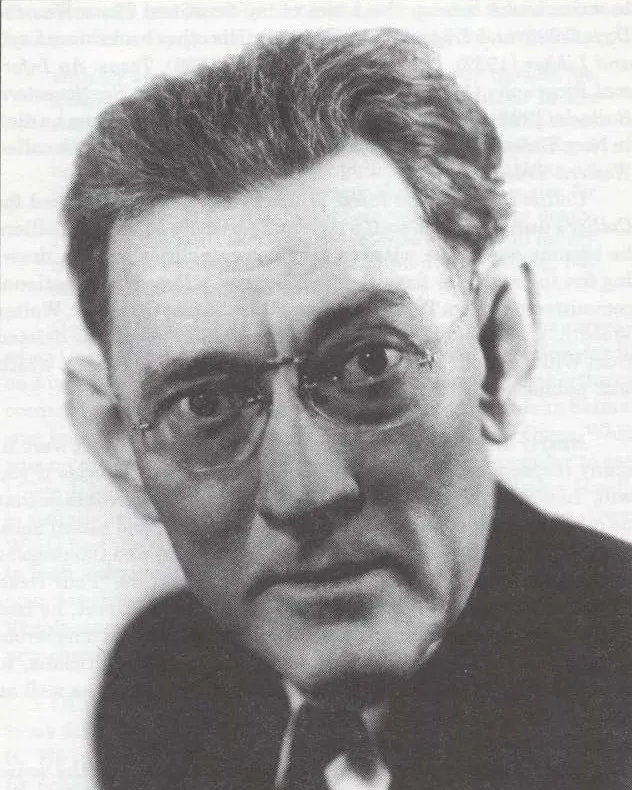
Owen P. White
Historical Summary
Owen Payne White (1879–1946), born in El Paso to Dr. Alward White and Katherine Payne White, became one of the most influential interpreters of El Paso and the American Southwest. Raised during the city’s transformation from a frontier settlement into a modern crossroads, he wrote with the immediacy of a reporter and the sensibility of a historian, capturing the passage from adobe to brick, wagon trails to railroads, Spanish-speaking border town to nationally connected American city, and the violent mythology of the Wild West to a more settled urban society.
Educated at El Paso High School, the University of Texas, and New York University, White served as a sergeant in a medical unit during World War I. He married Hazel Harvey in 1920 and that same year joined the El Paso Herald as a columnist. His first major book, Out of the Desert (1923), a sweeping history of El Paso subtitled The Historical Romance of El Paso, won praise from H. L. Mencken and the New York Times. His reporting on the election and inauguration of Miriam “Ma” Ferguson led to work for the New York Times, and in 1925 he moved to Cutchogue, Long Island, though he remained closely tied to El Paso.
White’s later career included service at Collier’s from 1926 to 1940 as a staff writer and associate editor, where he became a prominent political critic. His books included Them Was the Days, Trigger Fingers, Lead and Likker, My Texas ’Tis of Thee, Texas: An Informal Biography, and the poetry collections Southwestern Ballads and Just Me and Other Poems. He also wrote A Frontier Mother, a personal and affectionate portrait of frontier family life. At his death in New York on December 7, 1946, he was working on Western Trails.
White’s importance lay in his firsthand connection to El Paso’s formative years. He knew or interviewed eyewitnesses, lawmen, politicians, saloon keepers, and descendants of frontier figures, and he claimed to have witnessed the aftermath of Constable John Selman’s killing of John Wesley Hardin in 1895. His histories, though sometimes criticized for factual errors or broad narrative beginnings, were valued for their vivid portraits of both famous gunfighters and the ordinary men and women who built streets, churches, utilities, businesses, and civic institutions. Leon C. Metz and Woody Hunt present White as a foundational writer whose lively, accessible work made El Paso internationally known and whose legacy continued to shape later generations of Southwestern historians.
Document Transcription
Hall of Honor
2000
The Saga of Owen P. White
1879-1946
By Leon C. Metz
Woody Hunt
I consider myself lucky to have arrived in El Paso during the early 1950s at such an historically dynamic time. The town was awash with historians. C. L. Sonnichsen became my mentor, and I knew well such individuals as Haldeen Braddy, Eugene Porter, John Middagh, Rex Strickland and Rex Gerald, Tom Lea, Morgan Broaddus, Rabbi Fierman. The list goes on and on, and it seems unfair to identify so few and leave out so many. But I believe that none of us, except perhaps Dr. Sonnichsen, ever met Owen Payne White. I had the privilege, however, of meeting some of Owen's descendants who were in El Paso, and I recall talking briefly with some of them, although I must apologize because the years have treated unkindly my ability to recall yesterday's names.
It was Owen White who in many respects set the standard for my own historical writing, although White's writing and White's research were different from the historical writing and research of today. Today's writers and historians use newspapers, court records, old letters, journals, documents, diaries, directories, old-timer interviews—whatever we can find. We write stuffy prose, and we support our conclusions with equally stuffy items called footnotes. Thus a writer's ranking by his scholarly peers in today's world is often judged not so much by what he says or writes, but by the number of "ibids" at the foot of the page, and the completeness of his bibliography.
Owen White avoided all this—not that he would have used it anyway—because Owen wrote from the viewpoint of a reporter, a reporter on the scene with a sense of flair combined with a sense of history. In my judgment, Owen White recognized that he lived during a unique period of time both for himself and for El Paso. He lived and he wrote about a moment of transition that in less than twenty years would have passed, never to return.
Probably no series of events has enthralled the world's imagination more than the "American Wild West," and nowhere was the "Wild West" more epitomized than in the El Paso Southwest. Owen White captured the transition from adobe to brick, from ox carts and wagon trains to railroads, from Spanish to English, from lamplight to electricity, from rural to transcontinental, from a sleepy hamlet to a crossroads of America, from the peso to the dollar, from rotgut to Jack Daniels, from trails to streets, from one-room buildings to substantial hotels, from praying in tents to praying in church, from rolling dice on blankets to rolling dice on polished tables, from bathing in the river or irrigation ditch to bathing in a tub, from death by tuberculosis to death by gunfire.
Add all this together and what Owen White chronicled most was the "American Wild West," and in this case, to be specific, the El Paso "Wild West." As much as any other writer, he made the "Wild West" popular and understandable in human terms. He, more than any other writer, made the two words, El Paso, not only nationally famous, but internationally known.
Owen Payne White, a son of Dr. Alward and Katherine Payne White, was born in El Paso on June 9, 1879, two years before the arrival of the railroads. He graduated from El Paso High School in 1896, and briefly attended the University of Texas at Austin in 1898. He studied law at New York University, and during World War I became a sergeant while serving in a medical unit.
On January 22, 1920, he married Hazel Harvey and during that same year went to work as a columnist for the El Paso Herald. His first book, Out of the Desert, a history of El Paso, was published in 1923. H. L. Mencken, editor of the American Mercury, thought it a great book. It received an excellent review in the New York Times, and later White was asked by that newspaper to cover the election and inauguration of "Ma" Ferguson, the first woman governor of Texas. White accepted, and did such an outstanding job that the New York Times hired him as a reporter and columnist.
In 1925 White moved to Cutchogue, Long Island, where he lived until his death, although he often visited El Paso. He continued to write books: among them two of my favorites, Them Was the Days (1925) and Trigger Fingers (1926). His other books were Lead and Likker (1932), My Texas 'Tis of Thee (1936), Texas: An Informal Biography (1945), and two collections of verse: Southwestern Ballads (1922) and Just Me and Other Poems (1924). When he died in New York on December 7, 1946, he was working on a book called Western Trails.
Collier's magazine hired White in 1926, and he worked for Collier's until 1940 as a staff writer and associate editor. At Collier's he became one of the nation's best-known political critics, drawing fire in particular from Rentfro Creager, a Republican national committeeman from Texas, and Texas' Lieutenant Governor, Walter Woodul. Creager succeeded in getting a chapter about him deleted from White's book, The Autobiography of a Durable Sinner, which was published in 1942.
Nearly all of White's books about the American West were in many respects essentially biographies of El Paso, histories if you will. In writing about El Paso, Owen White had an advantage that no other historian since has shared. He was born and raised here. He grew up during one of El Paso's most colorful and flamboyant periods. Although he was only two in 1881 when the "Four Dead in Five Seconds" gun battle took place on El Paso Street, he had access to people who had been involved in the fray when he wrote about it. He was able to talk to eyewitnesses, to politicians, to newspaper reporters, to lawmen, and to saloon owners, as well as to descendants of those involved.
Owen was also a renaissance man—renaissance in the sense that he was someone interested in practically every aspect of human nature, whether it be politics, religion, business, professional, or personal. For instance, one of his books is A Frontier Mother, published in 1929. In spite of its title, it also furnished brief but detailed information about the father, who was a physician as well as a government man. Nevertheless, White's A Frontier Mother could just as well have applied to all mothers, past and present, who share a universal story of coping with what most of us would call the tribulations of life.
In A Frontier Mother he wrote, "I was born in a one-room, one-story, adobe house. It had a nice dirt floor, a roof of the same God-given material, one door, and one window with no glass in it, but the room was handsomely furnished with period furniture, made by hand from dry-goods boxes." White closed by noting that "entirely apart from the fact that she was our mother, we looked upon her as the most remarkable woman in the world. We couldn't help it. She could do anything from solving the toughest problems in geometry, to saddling a bronc or filing down a trigger pull. Thus by brushing all the little obstacles out of our way she made life easier for us. But now as I write, twenty-six years after her death, I can see the real reason for my intense admiration for my mother. It was not because she could do everything, but because she understood everything."
Owen White said he was present—an urchin on the street—when Constable John Selman killed gunfighter John Wesley Hardin on August 19, 1895, at the Acme Saloon on what is now the northwest corner of Mesa and San Antonio streets. In those days John Selman was known to almost everybody as Uncle John, and Owen White was no different. I might point out that now it is popular to cast Uncle John Selman in the heavy role, whereas John Wesley Hardin is usually treated much more sympathetically. However, Owen White had the advantage of recognizing and on occasion speaking to both individuals—although not at the same time. There is no question that the teenager Owen White found Selman a much more likable and affable individual. Hardin was obviously not as approachable.
Of all of Owen's books, his Out of the Desert, published in 1923, is my favorite. Owen White was in his early forties when he wrote it. He subtitled the book, The Historical Romance of El Paso, and he noted in his introduction that "an enormous amount of activity had been crowded into a short period of time, and an empire within an empire has suddenly sprung up out of the desert. At the center of this empire, El Paso stood as a magnificent monument to those few people who took the pioneer's chance and laid the foundation for all of the development which we see around us, and of which we are so proud." If everyone who lives here took the Owen White approach, El Paso would be emulated all over the continent as one of the great cities in this country.
16
LEON C. METZ
But Owen did have his shortcomings, and in one respect he reminded me of me. I recall Doc Sonnichsen once giving me that “Sonnichsen” look, saying in the process,
“Leon, one of your major historical problems is that you take the expression ‘begin at the beginning,’ much too liberally. If you were going to write a history of Fabens, for instance, you would probably open it with God creating the earth, and Noah building the Ark.”
So I understand Owen White. I understand why he felt compelled to open his history of El Paso, his Out of the Desert book, by beginning the narrative with Cabeza de Vaca, who probably never got closer to this area than the Big Bend. White’s history devotes dozens of pages to the settlement of Juarez and the coming Pueblo Revolt, which took place in northern New Mexico. Finally, nearly a third of the way through the manuscript, he places El Paso on the north bank of the Rio Grande and we start our progress from there.
Still, to me, White’s Out of the Desert, all of its 445 pages, tells the story of early El Paso. And I find it interesting, even touching, to know that while any publisher in the country would have jumped at a chance at this book, White chose the McMath Company, an El Paso publisher. McMath did an excellent job.
And while I might reiterate that gunfighters consume a significant portion of this history, they are not the core. The core of the book delves into the lives of the ordinary men and women who laid out the streets, organized the churches, started the utility companies, opened legitimate theaters as well as businesses, and put politics on a sound and productive footing. The final part of Out of the Desert consists of a series of excellent brief biographies about those El Pasoans about whom we now rarely hear or read much, but who at one time were the movers and shakers and developers of this land where we live.
I wish I could have known Owen White, although through his writings I feel that I do. I envision him as an amiable, warm, and receptive man, a witty, sometimes salty individual with a flair for words and expressions. Although Owen White’s work reminds me of the work of C. L. Sonnichsen, to a large extent these two people wrote about very different El Paso eras.
In closing, I do not know where the spirits of Sonnichsen and Owen White now dwell, but I have a hunch that they spend a lot of time sitting at the same table or leaning against the same bar, telling the same awful jokes, comparing mutual notes, discussing their research projects, and occasionally arguing trivia until the early hours of the morning. Both Owen Payne White and Charles L. Sonnichsen were, to a certain extent, folksy writers with folksy personalities, but they were not ordinary men; they were driven individuals.
Historians of today, folks like myself, tend to stand on the shoulders of these giants, often doing little more than reinforcing and broadening their facts, their arguments, and their conclusions. I’ve heard it said often that people like John Wesley Hardin, Pat Garrett, and Billy the Kid are my heroes, but that’s not true. People like C. L. Sonnichsen and Owen Payne White are my heroes. They paved the way. I just follow in their footsteps, and hope that I shall somehow do as well.
222
Comments from “El Paso’s Durable Sinner” by Carl Hertzog in Password, Vol. XXV (Summer 1980), 68–70.
“The book was an immediate success. The first printing sold out in a few weeks and a second edition was on the press. Naturally there were criticisms. The nit-pickers pointed out errors in historic facts, but the biggest noise came from those whose toes were stepped on. Owen was already exercising his ability to uncover questionable motivations, a perception that later served him well on the staff of a major national magazine.”